








Cost to Relocate a House: What Affects Moving Costs and How to Plan Your Budget
Relocating a house can be exciting, but it can also raise one of the most common questions people ask before moving: how much does it cost to relocate a house?
The answer is not always simple. Moving costs can vary depending on the distance, the volume of belongings, the type of property, the level of packing required, access conditions and whether the move is domestic or international. In addition, every move is different. A small apartment move across a city will not cost the same as a full household relocation between two European countries.
For this reason, the best way to understand the cost of moving home is to look at the main factors that influence the final price. This guide explains what affects house moving costs, what may be included in a professional relocation service and how to plan your budget more clearly.
If you are looking for professional support, you can also explore moving services from Top Removals.
What Is the Cost to Relocate a House?
The cost to relocate a house depends on the practical requirements of the move. In most cases, a moving company will calculate the price based on the size of the move, the route, the labour involved and any additional services requested.
A basic move may only include loading, transport and delivery. However, a more complete relocation may include packing, furniture dismantling, secure handling, temporary storage, customs or documentation support and final reassembly.
Therefore, instead of thinking of moving house as one fixed cost, it is better to view it as a combination of several cost elements.

These may include:
- Transport distance
- Volume of belongings
- Number of boxes and furniture items
- Packing materials and packing labour
- Loading and unloading time
- Access conditions at both addresses
- Parking restrictions
- Floor level, stairs or lift availability
- Fragile or high-value items
- Storage requirements
- Domestic or international route
- Dedicated or shared transport
- Urgency of the move
Because of these variables, the most accurate way to calculate moving costs is to request a tailored quote based on the real details of your relocation.
Main Factors That Affect House Moving Costs
Distance Between Collection and Delivery
Distance is one of the most important factors in moving house costs. A short domestic move is usually simpler to organise than a long distance move between regions or countries.
Longer routes normally require more fuel, more driving time, more route planning and sometimes more than one team member or vehicle. As a result, moving from one city to another, or from one country to another, usually costs more than a local relocation.
For international relocations, you can explore international removal services.

Volume of Belongings
The volume of belongings has a direct impact on the moving house price. The more items you need to move, the more space will be required in the vehicle. A larger volume may also require more packing materials, more labour and more time for loading and unloading.
For example, a small move with boxes and a few furniture items may be suitable for a flexible transport solution. On the other hand, a full household relocation may require a dedicated vehicle and a complete moving team.
This is why many moving companies ask for an inventory before providing a final quote.
Type of Property
The type of property also affects the cost of moving. Moving from a studio apartment is usually simpler than relocating a three-bedroom house, a large family home or an office.
The property type influences:
- The number of furniture items
- The number of boxes
- The time needed to pack and load
- The access requirements
- The size of the vehicle needed
In practical terms, the more complex the property, the more planning is required.
Access Conditions
Access conditions can significantly affect house moving costs. Even if the distance is short, difficult access can increase the amount of labour and time needed.
Moving costs may be affected by:
- Narrow streets
- Limited parking
- No lift access
- Long walking distance from vehicle to entrance
- Stairs
- Restricted loading zones
- Building access rules
- Time restrictions in residential or city-centre areas
Therefore, it is important to inform the moving company about both addresses in advance. Good access information helps avoid delays and unexpected costs.

Packing Requirements
Packing is another important cost factor. Some customers prefer to pack everything themselves, while others choose professional packing for extra protection.
Professional packing may include:
- Strong moving boxes
- Bubble wrap or protective wrapping
- Furniture blankets
- Wardrobe boxes
- Labelling
- Inventory support
- Protection for fragile items
- Packing for mirrors, artwork or delicate objects
Although packing support increases the initial cost, it can reduce the risk of damage during transport, especially for long distance or international moves.
Furniture Dismantling and Reassembly
Some furniture items need to be dismantled before transport. Beds, wardrobes, large tables, shelving units and office furniture may require extra handling.
If dismantling and reassembly are included, this can affect the final moving cost. However, it can also make the move much easier and safer.
This is especially useful when furniture cannot be moved through doors, staircases or lifts in one piece.
Storage Needs
Sometimes the new property is not ready when the move needs to begin. In that situation, storage may be required.
Storage can be useful when:
- There is a delay in the delivery date
- The new home or office is not ready
- The move is being completed in stages
- You are relocating internationally
- You need temporary space for furniture or boxes
Storage costs depend on the volume of items and the length of time required. Nevertheless, it can be a practical solution when the moving schedule is not perfectly aligned.
Dedicated or Shared Transport
The type of transport selected can also influence the price.
A dedicated move means that the vehicle is assigned specifically to your relocation. This usually provides more control over timing and delivery, but it may cost more.
A shared or consolidated move means your belongings travel as part of a route that may include other customers’ items. This can be more cost-efficient, especially for smaller moves or flexible dates.
As a result, shared transport may be a smart option if you are moving boxes, luggage, a few furniture items or a partial household load.
How Do Moving Companies Calculate Moving Costs?
Professional moving companies usually calculate moving costs by combining route, volume, labour and service requirements.
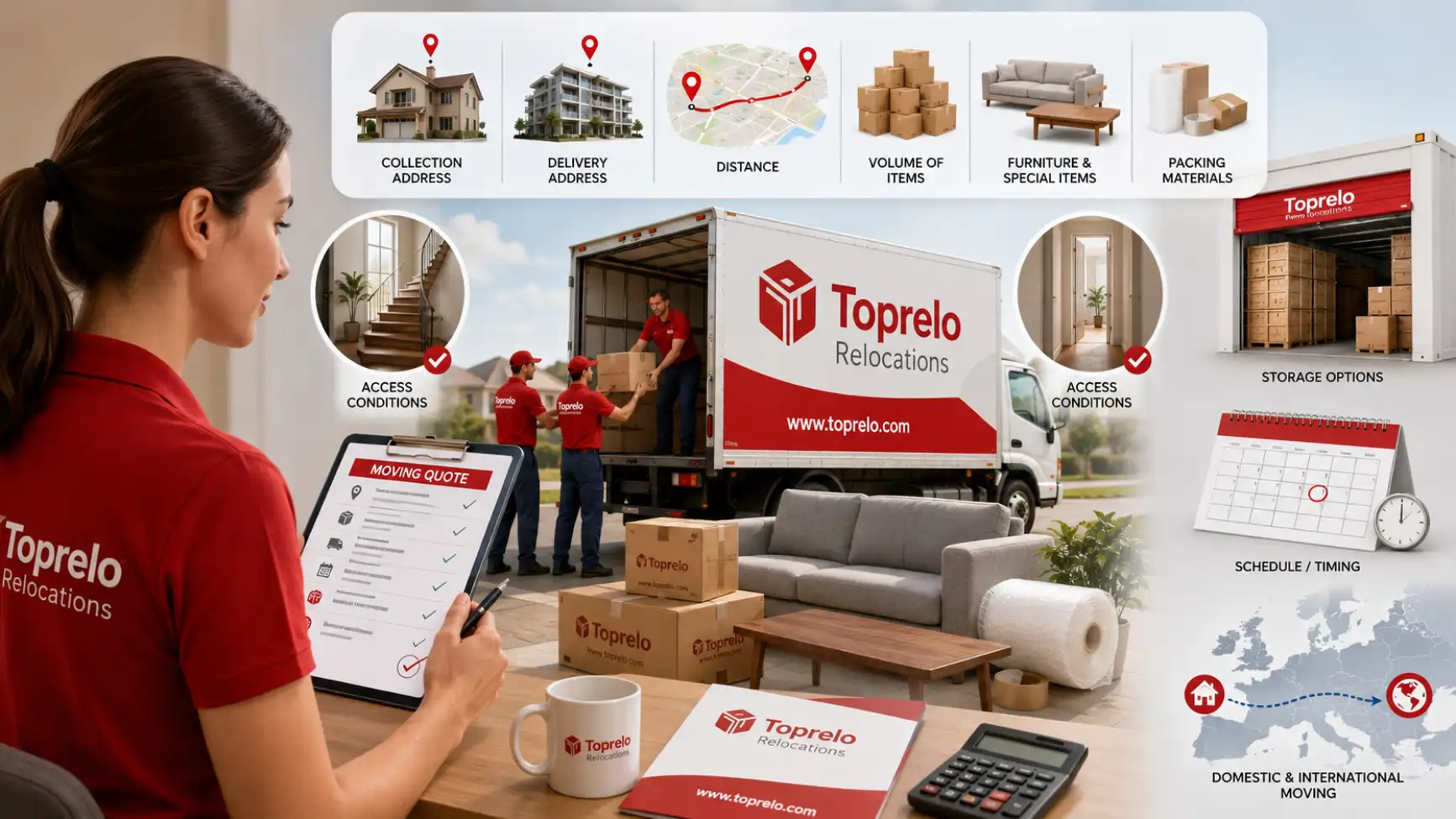
A typical quote may consider:
- Collection address
- Delivery address
- Distance between both locations
- Approximate volume of items
- Number of boxes
- Number and size of furniture items
- Packing requirements
- Access at both addresses
- Number of movers required
- Vehicle size
- Storage requirements
- Delivery schedule
- Whether the move is domestic or international
In many cases, the company may ask for photos, videos or an inventory list. This helps them estimate the required space and avoid inaccurate pricing.
A clear quote should explain what is included and what is not included. Therefore, before choosing a provider, always check whether packing, storage, furniture dismantling, insurance or special handling are part of the service.
What Is Included in Professional Moving Costs?
Not every moving company includes the same services. However, a professional relocation service may include several stages.
Move Assessment
The first step is understanding the details of the move. This may include the addresses, access conditions, property type, volume, preferred dates and any special requirements.
A proper assessment helps the moving company choose the right vehicle, team and route.
Packing and Protection
Packing may be included as an optional service. It is especially useful for fragile belongings, furniture, appliances, artwork, mirrors, electronics and high-value items.
Good packing can reduce the risk of damage during loading, transport and unloading.
Loading
Loading must be done carefully. Heavy items, fragile objects and boxes need to be positioned correctly inside the vehicle to prevent movement during transit.
This is particularly important for long distance routes.
Secure Transport
Transport is the core part of the service. The moving company manages the route, vehicle and delivery schedule. For international routes, this may also involve additional coordination.
Top Removals supports different destinations through its countries section.
Unloading and Placement
At destination, the team unloads the belongings and places them in the agreed areas. Depending on the service selected, this may also include furniture reassembly.
Optional Storage
If needed, storage can be added to the relocation plan. This is useful when there is a gap between collection and delivery.
Domestic Moving Costs vs International Moving Costs
Domestic and international moves are priced differently because they involve different levels of planning.
A domestic move usually takes place within the same country. It may still be long distance, especially if the relocation is between cities, regions or provinces.
An international move involves crossing borders. Therefore, it may require longer route planning, documentation, customs support when applicable, and more detailed coordination.
For moves between countries, visit international removal services.
What Is the Cheapest Way to Move a House?
The cheapest way to move house depends on the size and complexity of the relocation.
For small moves, the most cost-efficient option may be shared transport or a flexible route. This is especially useful when you only need to move boxes, luggage or a small number of furniture items.
For larger moves, the cheapest option is not always the safest. A low-cost provider may not include packing, proper protection, insurance, storage or reliable scheduling.
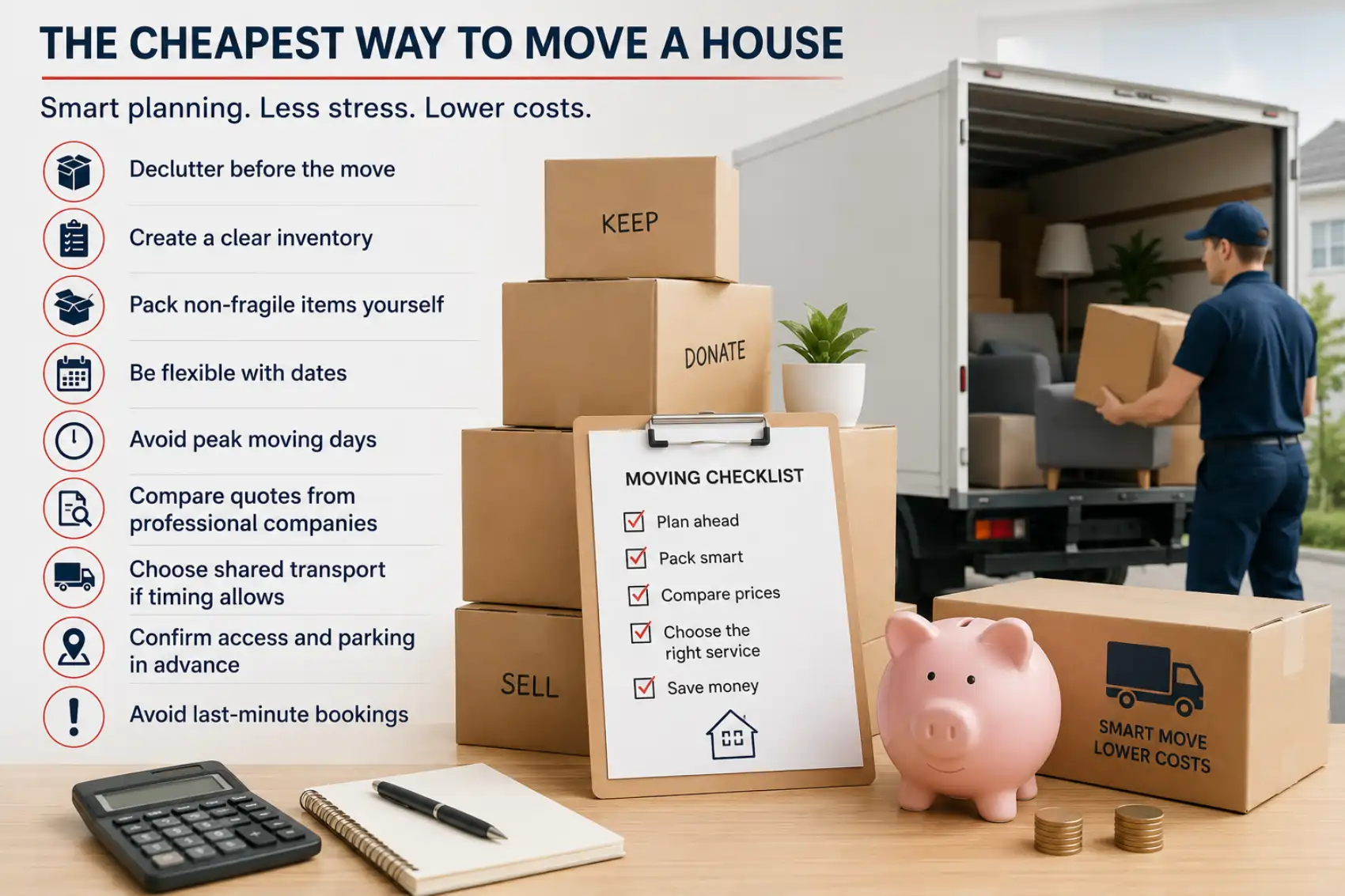
To reduce moving costs without increasing risk, consider these steps:
- Declutter before the move
- Create a clear inventory
- Pack non-fragile items yourself
- Be flexible with dates
- Avoid peak moving days when possible
- Compare quotes from professional companies
- Choose shared transport if timing allows
- Confirm access and parking in advance
- Avoid last-minute bookings
However, if you are moving fragile belongings, furniture, appliances or business equipment, professional handling is usually worth the investment.
How Much Money Is Needed to Relocate?
The amount of money needed to relocate depends on both moving costs and personal relocation costs.
Moving service costs may include transport, packing, labour, storage and delivery. However, personal relocation costs can also include accommodation, travel, deposits, utility setup, cleaning, repairs, temporary storage and time off work.
Therefore, your relocation budget should include more than the moving company quote.
A practical relocation budget may include:
- Professional moving quote
- Packing materials
- Storage if needed
- Travel costs
- Temporary accommodation
- Cleaning services
- New home setup costs
- Utility connection fees
- Emergency contingency
As a general rule, it is sensible to keep a contingency budget for unexpected costs. This helps reduce pressure if plans change.
What Are the Hidden Costs of Moving?
Hidden moving costs usually appear when key details are not discussed before the quote is confirmed.
Common hidden costs may include:
- Extra boxes or packing materials
- Additional labour time
- Long carry distance from vehicle to property
- Stairs or no lift access
- Parking permits
- Waiting time
- Last-minute date changes
- Storage extensions
- Special handling for fragile items
- Dismantling and reassembly
- Additional delivery stops
- International documentation support
The best way to avoid hidden costs is to give the moving company accurate information from the beginning.
Before booking, ask what is included, what is optional and what may generate an extra charge.
What Not to Do When Moving House
A poorly planned move can become more expensive than expected. To avoid problems, try not to make these common mistakes.
Do Not Leave Planning Until the Last Minute
Late planning can limit availability and increase costs. It can also make it harder to secure the right vehicle, team or delivery date.
Do Not Underestimate the Volume
Many customers underestimate how many boxes they need. This can lead to extra trips, a larger vehicle or last-minute changes.
Do Not Pack Fragile Items Poorly
Fragile items need proper protection. If they are not packed correctly, they are more likely to be damaged during loading or transport.
Do Not Forget Access Conditions
If there is no parking, no lift or difficult access, the moving team needs to know in advance.
Do Not Choose Only on Price
The cheapest quote may not include everything you need. Instead, compare the full service, not just the price.

How to Reduce the Cost of Moving House
Reducing moving costs is possible with good planning.
Declutter Before the Move
The less you move, the less space you need. Before requesting a quote, remove items you no longer want.
Prepare an Inventory
A clear inventory helps the moving company estimate the volume more accurately.
Choose Flexible Dates
If your dates are flexible, the moving company may be able to offer a more efficient route or shared transport option.
Pack Some Items Yourself
You can reduce costs by packing simple, non-fragile items yourself. However, professional packing is still recommended for fragile or high-value belongings.
Book Early
Early booking gives you more choice and more time to prepare.
Compare Service Levels
Do not compare quotes only by price. Check whether each quote includes packing, loading, storage, insurance, delivery and reassembly.
Cost to Move a House: Example Scenarios
Although every move is different, it is useful to understand how different situations affect pricing.
Small Apartment Move
A small apartment move usually involves fewer boxes, fewer furniture items and less loading time. If the route is flexible, shared transport may help reduce costs.
Family Home Relocation
A family home normally includes more furniture, more boxes and more packing. It may require a dedicated vehicle, especially for long distance routes.
Office or Business Move
A business move may include desks, chairs, IT equipment, documents, stock or operational materials. Timing is important because disruption should be kept to a minimum.
International Household Move
An international move requires more coordination. It may involve route planning, delivery scheduling, storage and documentation support.
For this type of relocation, Top Removals can support customers through international removal services.
How to Request an Accurate Moving Quote
To get an accurate quote, provide as much detail as possible.
You should share:
- Collection address
- Delivery address
- Preferred dates
- Property type
- Floor level
- Lift availability
- Parking conditions
- Approximate number of boxes
- Furniture list
- Fragile or valuable items
- Storage needs
- Packing requirements
- Any special handling instructions
The more complete the information, the more accurate the quote will be.
You can start by exploring Top Removals services.

FAQs About the Cost to Relocate a House
What is the cheapest way to move a house?
The cheapest way to move a house is usually to reduce the volume, pack simple items yourself, choose flexible dates and consider shared transport if your move is small. However, for fragile, valuable or long distance moves, choosing only the cheapest option can increase risk.
How much money is needed to relocate?
The amount needed depends on the moving service, distance, volume, packing, storage and personal relocation costs. It is sensible to budget for the moving quote, travel, temporary accommodation, cleaning, setup costs and a contingency fund.
What is the average cost to move a house?
Average moving costs vary widely by country, route, property size and service level. A small local move will usually cost much less than a full household relocation between countries. For the most accurate estimate, request a quote based on your specific inventory and route.
How do you calculate how much it will cost to move?
Moving costs are usually calculated based on distance, volume, labour, packing needs, access conditions, vehicle size, storage requirements and whether the move is domestic or international.
What not to do when moving house?
Do not leave planning until the last minute, underestimate the volume, ignore access restrictions, pack fragile items poorly or choose a moving company based only on the lowest price.
What are the hidden costs of moving?
Hidden costs may include extra packing materials, stairs, long carry distance, parking permits, waiting time, storage extensions, additional delivery stops, dismantling, reassembly or special handling for fragile items.
What is the hardest room to pack when moving?
The kitchen is often one of the hardest rooms to pack because it includes fragile items, appliances, glassware, plates, liquids and many small objects. It usually requires more time and better protection than expected.
Is professional packing worth it?
Professional packing is worth considering if you are moving fragile items, furniture, mirrors, artwork, electronics or high-value belongings. It can reduce the risk of damage, especially on long distance routes.
Are international moves more expensive than domestic moves?
International moves are often more expensive than domestic moves because they involve longer distances, more planning, possible documentation requirements and more detailed delivery coordination.
Can storage be included in moving costs?
Yes. Storage can often be included as part of the relocation plan if the delivery address is not ready or if the move needs to happen in stages.
Plan Your Move With Top Removals
The cost to relocate a house depends on distance, volume, timing, access, packing and the level of support you need. Therefore, the best approach is to plan early, prepare a clear inventory and request a quote based on your real moving requirements.
Whether you are moving locally, relocating across regions or planning an international move, Top Removals can help you organise a safe, efficient and well-planned relocation.
Explore moving services, discover international removal services or view available countries and moving routes to choose the route that best matches your destination.
Request a quote today and let Top Removals help you plan your move with clarity, care and professional support.